

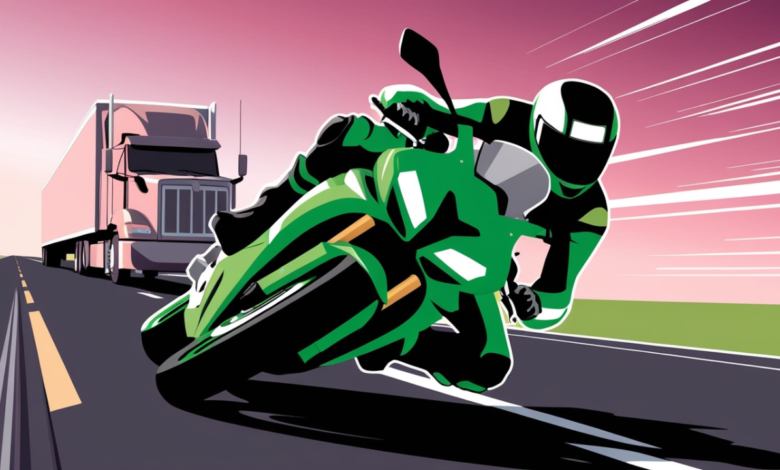
Imagine leaning into a sharp corner at 200 mph, feeling the bike vibrate beneath you as the tires scream against scorching asphalt. The wind resistance pushes against your chest, and you catch the distinct smell of burnt rubber mixing with exhaust fumes. Your heart pounds as you fight to maintain the perfect racing line, knowing that one wrong move sends you tumbling across the track. This is the visceral experience that motorcycle enthusiasts crave—pure adrenaline coursing through their veins.
The problem is that most motorcycle games on mobile or PC feel disappointingly arcade-like and fake. Exaggerated physics let you take impossible corners at unrealistic speeds. Bikes handle like they’re on rails rather than responding to weight distribution and tire grip. The immersion shatters when your bike bounces off walls without consequence or accelerates from 0 to 180 mph in three seconds flat.
For riders and racing fans who demand authenticity, the solution exists: games like Ride 5, MotoGP 24, and Traffic Rider represent the pinnacle of motorcycle simulation. These titles deliver the ultimate choice for those ready to download the motorcycle game that feels like real life, offering unprecedented realism that bridges the gap between virtual racing and actual track experience.
Why You Should Download the Motorcycle Game That Feels Like Real Life Today
Next-Generation Graphics That Blur Reality
Modern realistic motorcycle simulators leverage cutting-edge visual technologies that make distinguishing game from reality increasingly difficult. Ray tracing technology simulates authentic light behavior, creating realistic reflections in your bike’s chrome and mirrors, puddles on rain-soaked tracks, and dynamic shadows that shift as clouds pass overhead. These aren’t just pretty effects—they provide crucial visual information that helps you judge distances and track conditions just like real racing.
Dynamic weather systems transform races from predictable time trials into adaptive challenges. Watch storm clouds gather on the horizon as your race begins in sunshine. Within laps, rain begins falling, creating slick patches that demand immediate adjustment to your racing line and braking points. The graphics engine renders individual water droplets on your helmet visor, reduced visibility through spray from the bike ahead, and standing water that causes hydroplaning if you hit it too fast.
Texture resolution has reached photorealistic levels with 4K assets that capture every detail. You’ll see individual scratches on fairings from previous crashes, sponsor decals with readable fine print, brake discs glowing red-hot after hard braking, and asphalt texture that changes from smooth racing line to rough, debris-covered edges. This visual fidelity isn’t vanity—it creates the sensory immersion that makes you forget you’re playing a game.
Physics Engines That Demand Respect
What truly separates simulation from arcade racing is sophisticated physics modeling that replicates real motorcycle behavior. When you download the motorcycle game that feels like real life, you’re getting software that calculates weight distribution across both wheels in real-time, modeling how shifting your body weight affects handling through corners. Lean too far too fast, and the front tire loses grip. Accelerate hard while still banked over, and the rear wheel breaks traction.
Tire grip simulation accounts for temperature, wear, and surface conditions. Cold tires at race start provide limited grip until you complete warming laps. Push too hard, and you’ll cook the tires, reducing performance. Each tire compound—soft, medium, hard—offers different grip levels and longevity, forcing strategic decisions about which to mount for varying track conditions and race lengths.
Suspension geometry affects how your bike responds to track irregularities, braking forces, and acceleration. Dive too hard into corners and weight transfer compresses the front suspension, potentially causing understeer. Modern simulators model these dynamics with such accuracy that real-world racing techniques—trail braking, smooth throttle application, body positioning—work exactly as they do on actual tracks.
Sound Engineering for Complete Immersion
Audio design receives the same obsessive attention as graphics and physics in premium motorcycle simulators. Developers record actual engine sounds from real bikes—Yamaha R1s, Ducati Panigales, Kawasaki Ninjas—capturing the unique character of each engine at various RPMs. You’ll hear the deep growl at low revs transitioning to a high-pitched scream as you approach redline, with every gear change accompanied by authentic transmission sounds.
Environmental audio completes the immersion: wind noise increasing with speed, tire squeals during hard cornering, the distinctive sound of rain hitting your helmet, gravel crunching under wheels when you run wide, and even the satisfying click of your bike’s turn signals in the paddock. Doppler effects accurately model how engine notes change as bikes pass you or you overtake them at high speed.
For players using quality headphones or surround sound systems, spatial audio provides competitive advantage. You can hear competitors approaching from behind, judge their position and speed by engine note, and react accordingly. This audio feedback supplements visual information, creating the complete sensory package that defines what it means to download the motorcycle game that feels like real life.
Top Features of This Realistic Racing Simulator
Dynamic Weather Systems That Change Everything
Weather isn’t just visual flair in authentic motorcycle simulators—it fundamentally alters race strategy and bike handling. Races beginning in dry conditions might encounter rain halfway through, forcing split-second decisions: pit for rain tires or gamble on slicks? If you choose wrong, you’ll be sliding off-track within a lap. If you choose right, you’ll overtake competitors who made poor strategic calls.
Rain affects different parts of the track uniquely. Racing lines dry faster from constant wheel traffic, offering better grip than the wet outer edges. Puddles accumulate in track depressions, creating hydroplaning hazards. Curbs become treacherously slippery when wet. Wind gusts push your bike sideways on straights and affect stability during jumps over track elevation changes.
Temperature modeling extends realism further. Cold morning races start with ambient temperatures in the 50s, meaning tires take longer to warm up and brakes don’t reach optimal temperature immediately. Afternoon races in 95-degree heat cause different challenges—overheating brakes, reduced engine performance, and tires degrading faster than normal. Adapting to these conditions separates simulation experts from casual players.
Extensive Bike Customization for Performance Tuning
The motorcycle game that feels like real life offers mechanical customization depth that rivals actual racing. Exhaust systems aren’t merely cosmetic—aftermarket exhausts reduce weight and increase horsepower but may sacrifice low-end torque. You’ll adjust suspension preload, compression damping, and rebound damping independently for front and rear, tuning how your bike responds to bumps and weight transfer.
Gear ratios determine acceleration versus top speed characteristics. Shorter gearing provides explosive acceleration for tight technical tracks but limits maximum speed. Taller gearing sacrifices initial acceleration for higher top speeds on circuits with long straights. Brake balance adjustment lets you bias stopping power between front and rear wheels, affecting stability under hard braking.
Advanced players dive into tire pressure adjustments, spring rates, anti-squat geometry, and even fuel load management for endurance races. Each setting interacts with others, creating virtually unlimited setup possibilities. Professional racing teams spend thousands of hours optimizing these variables—simulations let you experiment freely, learning mechanical relationships that translate to deeper appreciation of real motorcycles.
First-Person Helmet Cam: Ultimate Immersion
While third-person cameras provide broader track awareness, first-person helmet cam perspective truly makes the experience feel like real life. Your field of view narrows to what an actual rider sees: the instrument cluster displaying speed and RPM, mirrors showing competitors behind, and the track ahead framed by your bike’s windscreen and handlebars.
Head tracking technology on supported platforms moves the camera as you turn your head, letting you check apex points by looking into corners or glance at mirrors by looking over your shoulder. This active participation in viewing angle increases immersion exponentially compared to static camera positions. VR headsets take this further, surrounding you completely in the riding environment.
Helmet cam also faithfully replicates the challenges real riders face. Spray from bikes ahead obscures vision in rain. Sun glare forces you to squint into corners with unfavorable angles. Your view shakes during hard acceleration and braking, and violent impacts temporarily blur vision or cause disorientation. These aren’t gameplay annoyances—they’re authentic complications that professional racers manage, now simulated for players seeking ultimate realism.
Step-by-Step Guide: How to Download the Motorcycle Game That Feels Like Real Life
Platform Availability and Selection
Before you download the motorcycle game that feels like real life, determine which platform suits your needs and hardware. Premium simulators like Ride 5 and MotoGP 24 release primarily on Windows PC, PlayStation 5, and Xbox Series X/S, leveraging powerful hardware for maximum graphical fidelity and physics calculations. These platforms deliver the absolute best experience but require significant investment in gaming hardware.
For mobile enthusiasts, Traffic Rider and similar titles offer surprising realism within smartphone limitations. While graphics and physics don’t match console versions, modern flagship phones deliver impressive simulation quality with the advantage of portability. iOS and Android versions often include touch controls optimized for smaller screens, though Bluetooth controller support dramatically improves the experience.
Cloud gaming services like Xbox Game Pass and PlayStation Plus now offer streaming access to premium motorcycle simulators without requiring expensive hardware. If you own a modest PC or even just a smartphone with stable internet, you can stream console-quality games directly. This democratizes access to authentic simulation experiences previously restricted to players with high-end gaming rigs.
System Requirements for Optimal Performance
Minimum PC Specifications:
- Processor: Intel Core i5-8400 or AMD Ryzen 5 2600
- RAM: 8GB DDR4
- Graphics Card: NVIDIA GTX 1060 6GB or AMD RX 580 8GB
- Storage: 50GB available space (SSD recommended)
- Operating System: Windows 10 64-bit
Recommended PC Specifications:
- Processor: Intel Core i7-10700K or AMD Ryzen 7 5800X
- RAM: 16GB DDR4 (3200MHz or faster)
- Graphics Card: NVIDIA RTX 3070 8GB or AMD RX 6800 XT 16GB
- Storage: 50GB SSD space (NVMe preferred for faster loading)
- Operating System: Windows 11 64-bit
Console versions automatically optimize for hardware, so PS5 and Xbox Series X/S owners simply need adequate storage space—typically 40-60GB depending on the title. Mobile versions require at least 4GB RAM and 2GB available storage, with flagship devices from the past three years providing the best experience.
1. Locate Official Download Sources
Always download games from legitimate sources to avoid malware, pirated versions, or scams. For PC, use Steam, Epic Games Store, or the publisher’s official website. Console players access PlayStation Store or Xbox Marketplace directly from their systems. Mobile users should exclusively use Apple App Store or Google Play Store—never sideload motorcycle games from untrusted websites.
Search for the specific title you’ve chosen: “Ride 5,” “MotoGP 24,” “Traffic Rider,” or other realistic motorcycle simulators. Verify the developer and publisher names match official information to avoid fraudulent clones. Read recent reviews to confirm the game meets expectations before purchasing.
2. Purchase and Begin Download
After selecting your game, proceed through the purchase process. Many titles offer standard editions around $50-70, with deluxe editions including additional bikes, tracks, or season pass content for $80-100. Some mobile simulators adopt free-to-play models with optional in-app purchases, letting you start immediately without upfront costs.
Initiate the download and be patient—modern games occupy significant storage space and take time even on fast connections. Console versions often allow you to begin playing once a playable portion downloads, with additional content loading in the background. PC downloads through Steam or Epic show precise progress and estimated completion time.
3. Installation and Initial Setup
Once download completes, installation typically proceeds automatically on consoles and mobile devices. PC users may need to manually run installer files, accepting license agreements and choosing installation directories. Select your fastest drive (preferably SSD) for optimal loading times and texture streaming performance.
First launch triggers initial setup: graphics quality presets, audio configuration, control scheme selection, and account creation for online features. The game may download additional updates or optimization shaders—this first-time setup ensures the best experience, so don’t skip these steps. Configure your controller, calibrate force feedback if using a racing wheel, and adjust sensitivity settings to personal preference.
4. Complete Tutorial and Calibration
Before jumping into competitive races, complete the integrated tutorial to download the motorcycle game that feels like real life requires. These tutorials teach essential techniques: proper braking points, racing line fundamentals, cornering body position, and understanding when to be aggressive versus conservative. Skipping tutorials leaves you unprepared for simulation physics that punish arcade racing habits.
Some games include calibration modes that customize difficulty to your skill level. Completing timed laps or specific challenges helps the AI gauge your abilities, adjusting subsequent race difficulty accordingly. This ensures engaging competition without overwhelming beginners or boring experienced riders.
Pro Tips for Beginners: Mastering Realistic Physics
Braking Techniques: Finding the Perfect Balance
Motorcycle braking differs fundamentally from car braking due to weight distribution and two-wheel dynamics. In authentic simulators, your front brake provides 70-80% of stopping power—when you brake hard, weight transfers forward, compressing the front suspension and increasing tire grip. The rear brake contributes less stopping power but helps stabilize the bike during deceleration.
Trail braking represents an advanced technique essential for fast lap times. Instead of completing all braking before corner entry, you gradually release brake pressure as you lean into the turn, maintaining forward weight bias that keeps the front tire loaded for maximum grip. Master this technique and you’ll carry higher entry speeds while maintaining control—mess it up, and you’ll lowside crash as the front tire washes out.
ABS (Anti-lock Braking System) settings affect braking character. Full ABS assistance prevents wheel lockup but increases stopping distance slightly and feels less connected. Reducing or disabling ABS rewards skilled brake modulation with shorter stopping distances but punishes ham-fisted braking with instant crashes. Start with full assists, then gradually reduce them as your skill develops.
The Ideal Racing Line: Speed Through Geometry
The fastest path around any corner follows geometric principles: brake in a straight line, turn in at the apex, then accelerate out smoothly. Visualize each corner as three phases: braking zone (straight line deceleration), apex (slowest point, tightest turning), and exit (progressive acceleration as you unwind steering input).
The racing line naturally widens your path through corners, using the full track width to create the gentlest possible arc. Enter wide, clip the apex at the track’s inside edge, then drift wide on corner exit as acceleration stands the bike up. This geometric approach minimizes the time you spend at slow speeds while maximizing the distance you spend at full throttle.
Different corner types demand adapted lines. Decreasing radius corners (tightening as you progress) require early braking and patient throttle application to avoid running wide at exit. Increasing radius corners (opening up) let you brake later and accelerate earlier. Linked corners where exit of one feeds directly into entry of the next require compromising the first corner’s line to optimize the second’s entry.
Managing High Speeds and Preventing Speed Wobbles
Speed wobbles—rapid oscillating of the handlebars—occur when forces disturb your bike’s stability at high velocity. In simulations modeling this phenomenon, wobbles start from bumps, aerodynamic turbulence from bikes ahead, or improper weight distribution. If wobbles begin, resist the instinct to fight the handlebars. Instead, grip with your knees, relax your arms, and gently apply throttle to shift weight rearward and regain stability.
Aerodynamics become crucial above 150 mph. Tuck tightly behind the windscreen to reduce drag and increase top speed. Your body position affects stability—standing upright creates drag that acts like an air brake, useful for slowing without touching actual brakes. Subtle body movements shift your center of gravity, affecting handling more dramatically as speeds increase.
Drafting (slipstreaming behind another rider) significantly increases top speed by reducing air resistance, but it also reduces cooling airflow to your engine and brakes. Extended drafting can cause overheating in endurance scenarios. Additionally, when you pull out to overtake, you suddenly encounter full wind resistance, momentarily reducing acceleration until your bike adjusts.
Comparison Table: Simulation vs. Arcade Racing
| Feature | Realistic Simulation (Ride 5, MotoGP 24) | Arcade Racing (Generic Mobile Games) |
|---|---|---|
| Physics Accuracy | True-to-life weight transfer, tire grip, suspension behavior | Simplified, forgiving physics with minimal consequences |
| Learning Curve | Steep—requires practice and technique mastery | Instant accessibility, immediate fun |
| Crashes | Realistic damage, race-ending consequences | Minimal impact, instant respawn |
| Customization | Deep mechanical tuning affecting performance | Cosmetic options with minimal gameplay impact |
| Graphics Quality | Photorealistic with ray tracing, 4K textures | Stylized, less detailed to support mobile hardware |
| Weather Effects | Dynamic conditions affecting grip and strategy | Purely visual with no gameplay impact |
| Target Audience | Enthusiasts seeking authentic riding experience | Casual players wanting quick entertainment |
| Controller Support | Full wheel/pedal sets, force feedback | Touch controls, basic gamepad support |
Why Gamers Choose Simulation Over Arcade
Players who download the motorcycle game that feels like real life aren’t looking for instant gratification or casual fun—they’re seeking the challenge and satisfaction that comes from mastering authentic riding physics. Arcade games feel limiting after experiencing simulation depth; once you’ve learned to properly trail brake into corners or felt the adrenaline of narrowly avoiding a highside crash through skilled throttle control, arcade gameplay feels hollow.
Simulation creates emotional investment that arcade games cannot match. When you finally nail that perfect qualifying lap after dozens of attempts, shaving tenths of a second through superior technique and bike setup, the accomplishment feels genuinely earned. When you win a championship after a season-long campaign managing tire strategy, weather conditions, and mechanical settings, the victory carries weight.
The motorcycle community gravitates toward simulation because it facilitates meaningful skill development. Techniques learned in high-fidelity simulators translate to real-world track days and street riding. Understanding weight transfer, tire grip limits, and proper body positioning makes you a better, safer rider. Arcade games entertain, but simulations educate while entertaining.
Key Advantages of Authentic Simulation
• Skill Transfer to Real Riding: Professional racers use simulators for training because the physics accurately represent real bike behavior. Techniques you develop playing simulations—smooth throttle control, proper braking points, ideal racing lines—improve your actual riding skills. This makes simulation software valuable beyond entertainment, serving as a legitimate training tool for track days or developing safer street riding habits.
• Risk-Free Experimentation: Real motorcycles are expensive, and crashes cause injury and financial damage. Simulations let you explore your limits without consequences. Want to know what happens when you brake too hard mid-corner? Try it in-game and learn from the resulting crash without medical bills or repair costs. This safe environment accelerates learning by removing fear of real-world consequences.
• Unlimited Access to Dream Bikes: Most riders will never throw a leg over a MotoGP factory race bike or vintage superbike worth six figures. Simulations provide virtual access to these machines, letting you experience how they handle, sound, and perform. Ride a Ducati Desmosedici GP bike one race, then switch to a classic Yamaha TZ750 the next—variety that’s financially impossible in reality becomes routine in simulation.
Important Note: While simulations provide remarkable realism, they cannot fully replicate the physical sensations of actual riding—G-forces during acceleration and braking, lean angle awareness from balance, wind buffeting, and temperature changes. Use simulations to develop mental skills and understanding, but recognize that transitioning to real motorcycles still requires careful, progressive skill building under professional supervision.
Frequently Asked Questions
Is the game free to play, or does it require purchase?
Pricing models vary significantly across motorcycle simulators. Premium titles like Ride 5 and MotoGP 24 require upfront purchase, typically $50-70 for standard editions, with optional DLC packs adding bikes, tracks, or customization options. These paid games include complete base content without aggressive monetization or pay-to-win mechanics.
Mobile simulators often adopt free-to-play models with in-app purchases. Traffic Rider and similar titles download free, letting you start immediately without financial commitment. However, free versions typically include advertisements and limit content access—premium bikes, tracks, or customization require in-app purchases or watching ad videos to unlock.
Subscription services provide another option. Xbox Game Pass and PlayStation Plus include various motorcycle simulators in their catalogs, letting subscribers download and play without additional purchase as long as their subscription remains active. This represents excellent value if you play multiple games monthly, though you lose access if you cancel subscription.
Does it support VR (Virtual Reality) for extra realism?
Many modern motorcycle simulators offer VR support, providing the most immersive experience possible when you download the motorcycle game that feels like real life. VR headsets like Meta Quest 2, PlayStation VR2, and Valve Index completely surround you in the racing environment, with 360-degree head tracking that lets you naturally look through corners, check mirrors, or glance at your instrument cluster.
VR’s immersion advantage comes from proper scale, depth perception, and natural head movement. Judging braking points and apex distances becomes more intuitive when viewing the track in stereoscopic 3D. Looking through corners by physically turning your head feels natural compared to button-based camera controls. The sense of speed intensifies dramatically when fully enclosed in the virtual environment.
However, VR requires powerful hardware to maintain high framerates necessary for comfortable experience—motion sickness occurs if framerates drop below 60-90 FPS depending on headset. Additionally, VR racing sacrifices some competitive advantage since you cannot see the entire track simultaneously like third-person views allow. Most serious sim racers use VR for immersive practice sessions but switch to monitor views for competitive racing.
Can I play this game offline without internet connection?
Single-player content in most motorcycle simulators works completely offline once downloaded and installed. Career modes, time trials, quick races, and practice sessions against AI opponents require no internet connection. This makes them excellent for gaming during travel, commutes, or locations with unreliable internet access.
However, online features obviously require connectivity: multiplayer races, leaderboards, downloadable content, live events, and cloud save synchronization all need internet access. Some games implement always-online DRM (Digital Rights Management) that requires authentication even for single-player modes, though this practice has become less common due to player backlash.
Mobile simulators generally require initial internet connection for authentication and downloading game assets beyond the basic installer, but afterward, many support offline play. Check specific game requirements before assuming offline capability, especially for free-to-play titles that may require connection for advertisement delivery or monetization features.
What is the best controller for the most realistic experience?
Controller choice significantly impacts your simulation experience, with specialized racing wheels providing the most authentic feedback. Full motorcycle-specific controllers exist but remain niche and expensive. Most sim racers use racing wheels designed for cars, which still dramatically improve immersion and control precision compared to standard gamepads.
Recommended Controller Options:
Standard Gamepad: Xbox or PlayStation controllers work adequately for beginners, offering analog triggers for progressive throttle and brake control. However, they lack force feedback and don’t replicate the feel of actually controlling a motorcycle’s handlebars.
Racing Wheel Setup: Thrustmaster T150, Logitech G923, or Fanatec CSL DD wheels provide force feedback that communicates tire grip, road surface, and bike dynamics through resistance in the wheel. While designed for cars, the steering input and force feedback significantly enhance immersion. Add separate pedals for realistic braking control.
Direct Drive Wheels: High-end options like Fanatec Podium or Simucube 2 offer the strongest, most detailed force feedback, costing $1000-2000+ for complete setup. These professional-grade systems provide feedback fidelity approaching real vehicles but represent serious financial commitment.
Motorcycle-Specific Controllers: Rare products like the Ride4 Bike Controller feature actual motorcycle handlebar controls with throttle, brakes, and clutch positioned authentically. These specialized controllers offer maximum realism but cost $500+ and work with limited game selection.
For most players, a mid-range racing wheel ($200-400) with force feedback represents the best balance of realism, compatibility, and cost. Gamepad usage works fine initially, but upgrading to a wheel transforms simulation into something far more engaging and authentic.
[shurtcut_custom_here url=”https://zcink.com/dawloand/ text=”Download links”]
Conclusion
For motorcycle enthusiasts who crave authentic riding experiences without leaving home, the decision to download the motorcycle game that feels like real life delivers unmatched satisfaction. These sophisticated simulators bridge the gap between digital entertainment and genuine riding, offering physics accuracy, visual fidelity, and mechanical depth that transforms gaming into legitimate training and skill development.
We’ve explored what separates true simulation from arcade pretenders: next-generation graphics with ray tracing and dynamic weather, physics engines that model real motorcycle behavior with scientific precision, sound engineering that captures the visceral roar of high-performance engines, and customization depth that rivals actual racing teams’ setup sheets. These aren’t just games—they’re comprehensive riding simulators that respect and challenge players who demand authenticity.
Whether you’re a track day enthusiast looking to refine your technique during winter months, a motorcycle fan who cannot yet afford your dream bike, or a gamer seeking the ultimate challenge that arcade racers cannot provide, motorcycle simulation delivers experiences that engage, educate, and excite. The learning curve is steep, but the rewards—mastering realistic physics, achieving perfect laps through skill rather than game exploits—create lasting satisfaction.